How they really differ
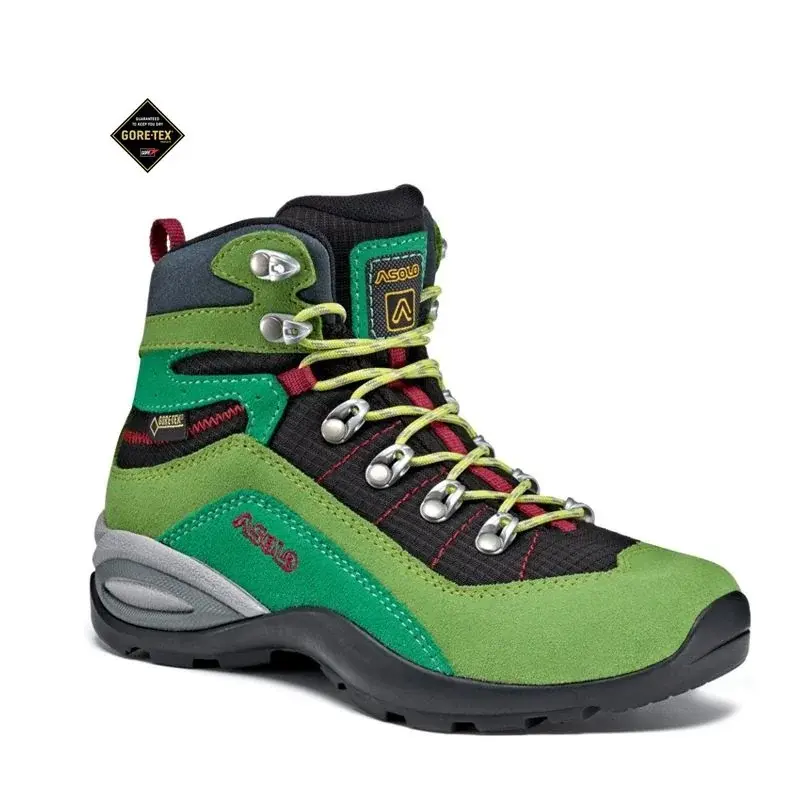
A low shoe ends below the ankle, while a mid-cut shoe (often labelled “mid”) covers it. Most of the differences stem from this:
- Weight: a low shoe is usually a few hundred grams lighter. Weight on your feet tires you out more than the same weight on your back, because you lift it with every step.
- Freedom of movement: in a low shoe, the ankle works on its own, whereas a mid-cut shoe restricts its sideways movement.
- Protection: a higher upper protects the ankle from hitting a rock. Fewer small stones, less snow, and less water from wet grass get inside.
- Ventilation: in a low shoe, your foot sweats less and the shoe dries faster.
Does a mid-cut shoe protect against ankle sprains?
Partially. A tightly laced higher upper provides resistance when the foot starts to twist to the side. It helps most when your legs are no longer obeying you at the end of the day. But the height alone will not protect against a sprain. The following things are equally important:
- Firm heel: a heel reinforcement holds the foot so it doesn't slide sideways in the shoe.
- Stiff sole: a shoe that cannot be easily twisted in your hands like a towel won't be easily flipped by a rock. Stiffness is mainly determined by the midsole.
- Correct size and lacing: if your foot is swimming in the shoe, even a high upper won't help.
- Your ankles: strong ankles accustomed to the terrain can handle more in low shoes than someone who only walks on pavements all year round expects.
A mid-cut shoe with a soft upper that can be bent in all directions protects less than a well-fitting low shoe with a stiff sole. When choosing, therefore, try to twist the shoe in your hands and squeeze the heel. It will tell you more than its height.
When to reach for low shoes
- paved and forest paths, waymarked trails at lower altitudes
- summer hikes in warm and dry weather
- fast, lightweight hikes with a small backpack
- approaches to rocks and easier via ferratas: so-called approach shoes are used for this, i.e., low shoes with a stiffer toe box and sticky rubber under the toes, in which you can even climb on rocks
- when you have strong, experienced ankles and prefer lightness
What to watch out for: small stones, snow, and water from wet grass easily get into a low shoe. Low gaiters will help. And a membrane in a low shoe will only keep water out from the bottom and sides. In ankle-deep dew, water will flow in from the top.
When to reach for mid-cut shoes
- rocky and uneven terrain, scree, roots, mud
- a multi-day trek with a heavier backpack: with a load on your back, the foot is under more stress and ankle support becomes noticeable at the end of the day
- mountains in spring and autumn, snow, rain, and wet grass
- long descents with a backpack
Watch out for the opposite misconception: a mid-cut shoe is not yet a mountain boot. For alpine terrain, snow, and for use with crampons, you need stiff mountain boots. We describe these in the article How to choose trekking boots.
Quick decision
- Forest path, dry weather, small backpack: low shoes.
- Rocky trail for a day with a light backpack: either. The stiffness of the sole and your ankles are the deciding factors.
- Multi-day trek with a full backpack: mid-cut shoes.
- Wet conditions, snow, dew: mid-cut shoes with a membrane, or low shoes with gaiters.
- Approach to rocks and easy via ferrata: low approach shoes. For long mountain via ferratas, mid-cut shoes.
- Hot weather: low shoes with a breathable upper.
Upper material
- Leather (smooth, nubuck, suede) is durable and holds its shape. With waterproofing, it resists water for a long time. However, it is heavier, takes longer to dry, and needs breaking in.
- Textile is light, dries quickly, and hardly needs any breaking in. However, it scuffs on rocks more easily than leather.
- Combination puts leather where the shoe rubs and textile where it needs to breathe.
A membrane (such as GORE-TEX) keeps your foot dry in the rain and in wet grass. In hot weather, however, your foot sweats more in it than in a shoe without a membrane. If you primarily walk in the summer in dry conditions, you do not need a membrane.
How to try shoes on
- Try them on in the afternoon when your foot is slightly swollen.
- Wear the socks you hike in. We write about why they matter in the article Trekking socks.
- Leave about a centimetre of space in front of your toes. Going downhill, your foot slides forward in the shoe.
- When walking uphill, your heel must not slip up and down inside the shoe.
- Try walking downhill or on an inclined surface. Your toes must not hit the front.
- Hooks at the ankle allow you to lace the lower and upper parts with different tightness: the instep more loosely, the ankle more tightly.
- Break in a new shoe on shorter walks before setting off on a long hike with it.
To make your shoes last, take care of them. You can find a guide in the article How to care for ASOLO leather boots. What the brand on the sole means is explained in the article What is Vibram?
Range: men's low shoes · women's low shoes · men's mid-cut shoes · women's mid-cut shoes · kids' mid-cut shoes
Back to blog