Just as you protect other parts of your body, you need to give the same care to your feet.
To protect your feet and keep them dry and warm at the same time, you need to wear high-quality socks along with suitable footwear.
How does a sock work?
During walking, the foot is stressed from all sides, so you need to avoid the formation of unpleasant hot spots, blisters, and abrasions.
Since a sock is in direct contact with your skin, it is the first and essential aid designed to ensure the proper wicking of sweat away from your feet, while also providing comfort and warmth.
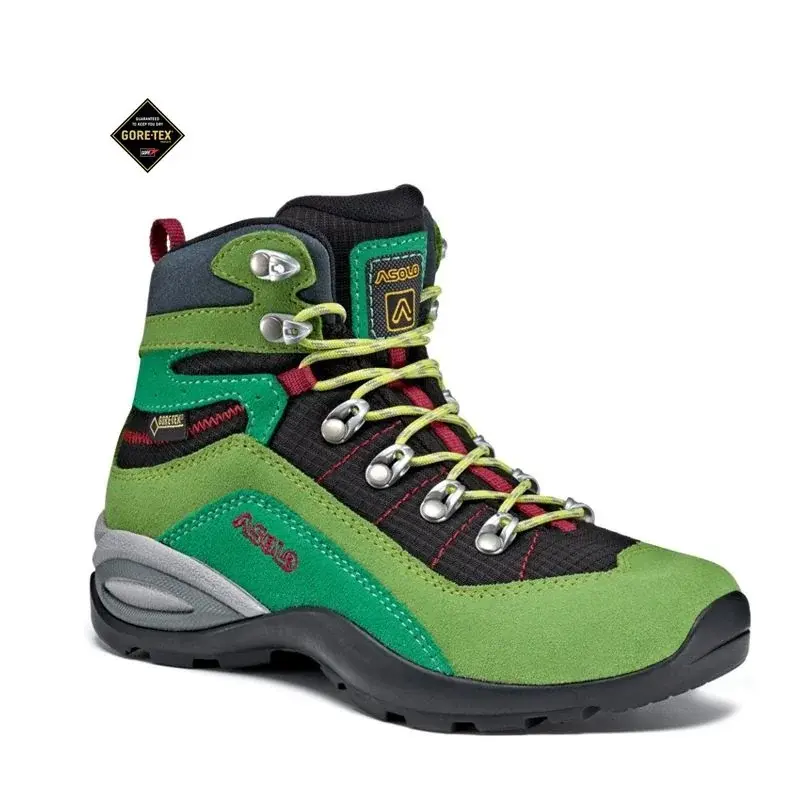
If you invest in expensive boots that you expect to protect your feet, it logically follows that you should also invest in high-quality socks. An ordinary sock might be fine to wear, however, it does not have any great functional properties, such as sweat wicking. With such a sock, even pricey trekking boots will be truly useless.
Therefore, you need to pay sufficient attention to choosing your socks.
How to choose socks?
An outdoor sock features technical knitting. This means it is perforated on the instep, while the heel and toe are reinforced against rubbing. Elasticity plays a major role in the comfort and functionality of socks.
When choosing socks, the correct size and cuff height are also very important. The cuff should always extend above the edge of the boot so that the cuff does not dig in and you can tie the boot tightly without any problems.
With trekking socks, you will undoubtedly need a certain level of thermal comfort for your required conditions. For trekking socks, you therefore follow this breakdown:
By season
- winter
- summer
- all-year
Or by the manufacturing technology used
- single-material
- multi-material
- specialised
In terms of materials, you come across trekking socks that are woollen, blended, or purely synthetic.
However, the most popular today is a blended knit made of
1. Natural fibres, which are absorbent and soak up moisture – hydrophilic materials
Natural materials have a specific property, which is absorbing moisture into their volume.
Moisture is, however, undesirable in outdoor conditions, especially in contact with the skin. Natural materials, apart from wool, are therefore placed on the outer face of the sock within the knit, away from contact with the skin of the foot.
If you want to utilise the positive properties of natural materials in socks, it is advisable to blend natural materials with synthetic ones. This is doubly true for trekking socks, which are mostly worn in boots with a waterproof membrane.
For outdoor socks, the most widely used is very fine Merino sheep wool with fibres under 25 microns in diameter (the material does not itch). Wool has a natural ability to stay odour-free for a long time, it absorbs up to 35% of moisture without it being visible or noticeable on the skin (meaning it keeps you warm even when wet). The fibre structure also promotes excellent airflow. Thanks to its composition, bacteria do not multiply in wool.
2. Synthetic fibres, which are non-absorbent and repel moisture – hydrophobic materials
From synthetic materials, such as polypropylene (POP), acrylic (PAN), polyamide (PAD), or polyester (PES) fibres, you expect a feeling of a dry and warm environment. These materials are flexible when bent, ensuring softness and protective properties in the sock's knit. You will mainly find their place in an outdoor sock in the base of the inner layer.
Polyamide has excellent physical parameters, such as high strength when dry, abrasion resistance, and also elasticity. It absorbs only 4.5% of moisture.
Generally, the most used synthetic material is polyester (PES). Alongside wool, and especially blended with it, it is considered an excellent material for manufacturing outdoor socks.
Summary
With a suitable composition of these two types of fibres, trekking socks achieve excellent parameters in wicking or absorbing sweat moisture, as well as in thermal comfort.
Choosing socks always depends on the season and the activity for which you plan to use them. Generally speaking, for treks, the ideal socks are made from blended materials, meaning natural materials combined with synthetic ones.
Sock care
It is always better to wash socks in products designed for thermal underwear. There are countless such products on the market. There is no need to use fabric conditioner, as in extreme cases it can irritate the skin on your foot, and also irreversibly damage the functionality of the material the sock is made from.
A general rule you cannot go wrong with is to always follow the instructions on the packaging, labels, or the manufacturer's advice.
Check out our range of men's, women's, and children's outdoor socks.
Back to blog