When Cheryl Strayed, played by Reese Witherspoon in the film Wild, set out on her epic hike along the Pacific Crest Trail in 1995, her gear was almost perfect. Except for her footwear. The hiking boots she bought before leaving soon nearly drove her mad. Do you know the story?
Take your time when choosing the right footwear
Before an expedition, you need to spend more quality time choosing the right footwear than you would picking out plimsolls for PE. And we'd add that it's not just before an expedition on the scale of the Pacific Crest Trail; even for regular local walks or hikes in the mountains, you need to choose your boots carefully so they won't let you down under any circumstances.
What are the basic requirements for perfectly fitting footwear?
Navigating today's range of trekking boots is no easy task. The basic function of a boot is to provide your foot with the necessary:
- support,
- stability,
- protection.
It is no exaggeration to say that properly chosen footwear can save your life on the ridges. Conversely, a poor choice can put it at risk. People often misjudge the level of risk, and in the mountains especially, they can make fatal mistakes.
The more demanding the terrain, output, and weather, the stiffer, more durable, heavier, and more robust your boots will need to be. However, it's a good idea to pay attention to the quality of your footwear even on much lighter hikes.
Which boot for which terrain?
1. Lowlands, forests, walking trails, paved paths
Here (apart from snow-covered surfaces), all-rounders, low-cut walking or outdoor shoes with a soft sole will likely be perfectly sufficient. They should be lightweight, waterproof, flexible, and stable at the same time. Ideal for walking or even running. For more demanding hikes (still in favourable conditions and on paved trails), you can opt for stiffer, higher boots with ankle support.
2. Rugged and unpredictable terrain, boulders, rocks, scree, slippery grass, mud
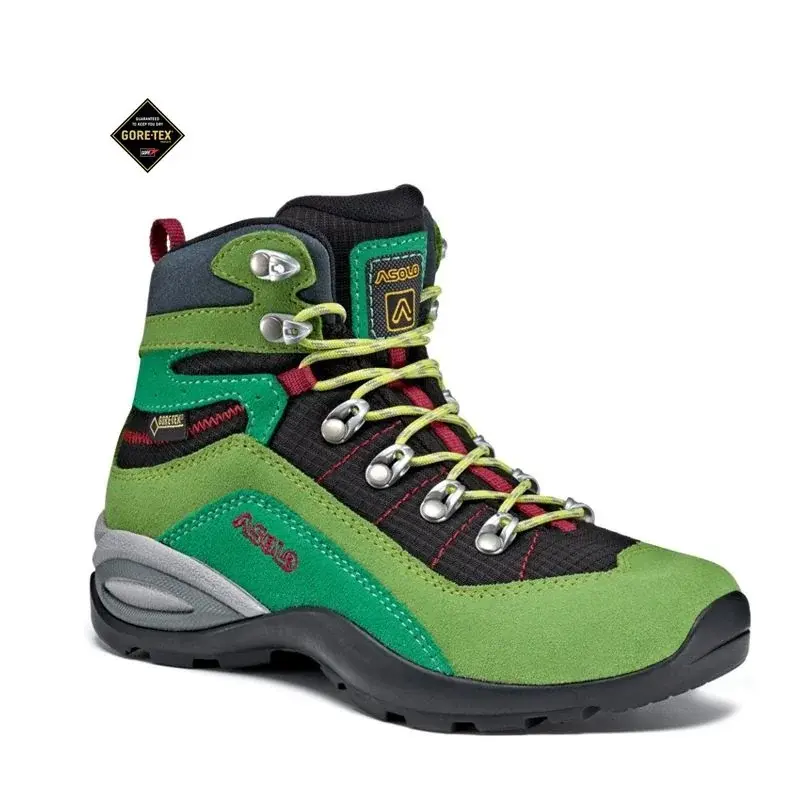
Here, you'll appreciate a robust boot with a stiff, grippy, and durable sole. A boot that doesn't slip, provides cushioning, and protects your feet under increased stress. It's important that it firmly grips the heel, secures the foot, and prevents your toes from hitting the toe box when walking downhill. A higher ankle better protects your feet from sprains. The sole is stiff enough to protect your feet as much as possible during a full day of walking with a heavy backpack. However, trekking boots must also be lightweight, because on an all-day trek, every saved gram matters.
3. Alpine terrain, via ferratas, ice, snow, rocks
Here you'll need mountaineering boots to which you can attach both walking crampons for glaciers and rigid crampons. Such boots are highly resistant to abrasion and damage, allow sufficient ankle mobility, and may also feature an insulating layer. Top-category, very stiff expedition boots for freezing temperatures additionally feature integrated gaiters.
Myths and facts about outdoor footwear
1. The most expensive is the best
You can't say that you'll always get a perfect product for a lot of money. By that, we mean the perfect product specifically for you and the purpose you're buying the boot for.
2. What is high quality and expensive will last all year round
Not quite. What is versatile won't hold up in extremes. It's the same as with tyres: someone driving on all-season tyres all year round is compromising in both summer and winter. Someone buying boots specifically for spring and autumn will need separate boots for winter. Always consider the conditions you are buying the boots for.
3. Full-leather boots are better than a leather and fabric combination
Is it true or not? When you figure it out, let us know – you'll help settle an age-old dispute between two camps. The pros and cons of both versions are currently about the same. The final choice remains purely subjective according to individual needs, the specific purpose, and the difficulty of the expedition. For example, hiking boots for demanding trekking are almost exclusively full-leather due to their resistance to mechanical damage.
4. Socks don't matter
This isn't true at all. Quality boots and quality socks make a perfect pair. When one of them doesn't work as it should, things go wrong. Or rather, they pinch, cause blisters, or slip. Socks are also important when buying and trying on boots – ideally the exact ones you'll wear on the hike, not the ones you wear to the office.
5. The main thing is for the boots to fit snugly
This is definitely not true. A boot should be wide enough so you can comfortably spread and wiggle your toes. You might have a congenital defect, a high instep, or flat feet. Then you have to adapt to that, and design must be put aside.
6. Does a waterproof boot mean I can wade across a river with dry feet?
No. Melting snow, persistent rain, tall wet grass, a stream... You'll keep your feet dry for a while, but water always finds a way in, most often through the seams. That's why the rule applies: the fewer there are, the better.
7. Is it even necessary to consider midsole stiffness?
Absolutely! Categorising boots according to stiffness and the terrain you're heading for will help you choose. Get advice from the retailer and try them on, try them on, and try them on. Feel free to go back to the shop at a different time of day, as your foot changes significantly throughout the day.
8. They are just boots, no care is needed
Care is the number one priority. How you look after your boots is how they will look after your feet. The basic principles of care after every hike (depending on the boot material, of course) are:
- clean the boots thoroughly,
- let them air out,
- dry them completely,
- waterproof them carefully,
- wax them meticulously,
- do not machine-wash them,
- do not force them on.
If you're still struggling to choose the right footwear, don't hesitate to get in touch with us. We'll be happy to advise you by email or over the phone.
Back to blog