What should you prepare for and how should you behave in the mountains to prevent unnecessary problems? Read our ten rules for safe mountain hiking.
1. Planning your route
Plan your hiking route carefully. Proper preparation starts at home. Find out all available information about the place you are going to. Always adapt the difficulty of the terrain and the length of the route to the least fit person in the group.
Are you taking children with you? Remember that even if a child doesn't have the same stamina as you, they want to keep up with you and therefore often won't show fatigue. Take breaks at least every hour. The same applies if you take a dog on a hike. Do not take children under two years of age on a cable car, as they may react worse to sudden pressure changes.
2. The right equipment above all
Prepare and check your equipment and its adjustment thoroughly. Choose your equipment according to the difficulty of the terrain and the season. Always rely on what you have tested. Do not risk taking new, untested items (this is especially true for footwear). Remember that the temperature drops with altitude, by 0.6–1 °C for every 100 m.
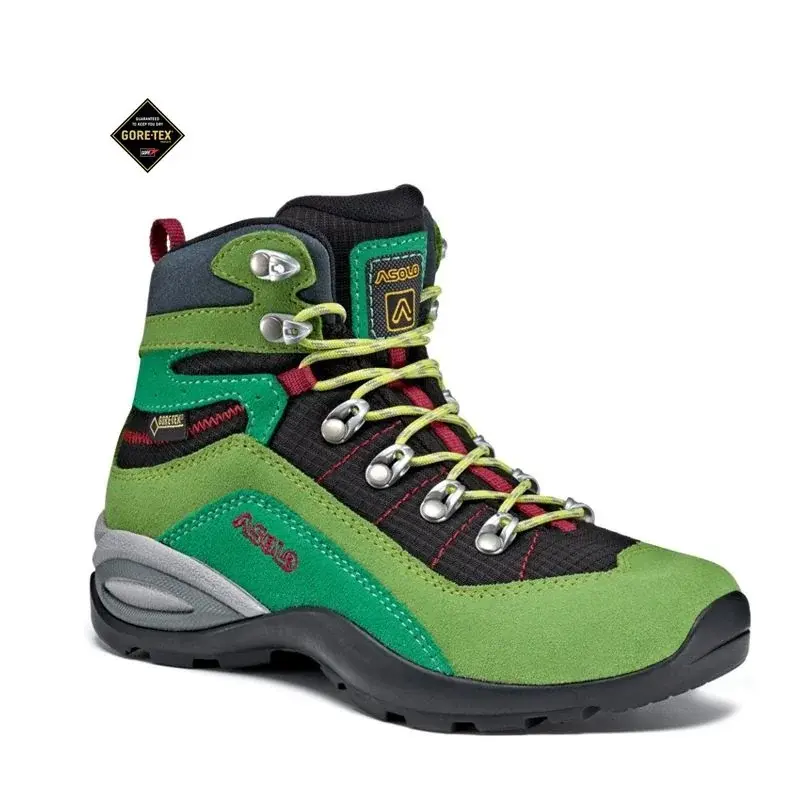
Wear sturdy hiking boots with a non-slip sole, take a hiking backpack with a first aid kit, sun protection, warm outdoor clothing that protects against the wind, plenty of fluids, provisions for the journey, and a fully charged mobile phone (a power bank is also handy).
However, do not carry unnecessary items. Your backpack should have a hip belt and its weight should not exceed 20% of your body weight. While hiking, eat foods rich in complex carbohydrates and drink often.
3. What will the weather be like?
Pay close attention to the weather. Monitor its development, the forecast, and the storm, snow and avalanche situation. Heed warnings from the mountain rescue service about dangers and changes. The weather in the mountains is very changeable. Always assess whether the weather conditions and terrain match your expectations and the abilities of everyone in the group.
4. Do they know about you?
Always let your relatives, friends or the hut warden know where you are going and when you plan to return. If you change your plan in any way, let them know. This will prevent an unnecessary search operation. You can also download the mountain rescue service app to your mobile phone.
Start your hike early in the morning, the earlier the better. Adapt your pace to the weakest member of the group.
5. It might be further...
Do not stray from marked trails. In impassable terrain, there is a risk of losing your bearings, falling or being injured by falling rocks. Avoid shortcuts. If you find yourself off the trail, go back to the last known location. Stick to the rule: when in doubt, turn back.
6. Do you know where you are?
Learn how to properly use a map on a scale of 1 : 50 000 or 1 : 25 000, a compass and an altimeter. Satellite navigation (GPS) is an excellent aid for orientation. Where there is a signal, a mobile phone is one of the most important rescue tools. Do not forget to take it and charge it properly before you leave (and a power bank just in case).
7. Safety in threes
Never go on a hike unaccompanied. Groups of three are ideal. In the event of an accident, two can help, or one can stay with the injured person while the other goes for help.
8. Accidents don't just happen
Carry a first aid kit with you. When needed, it is good to know how to provide first aid. In the event of an injury, stay as calm as possible. Call for help for the injured person using a mobile phone, light or other signals. Call for help and do not leave the injured person.
9. Consideration
Learn to recognise the types of warning signs and their meanings. Always protect yourself and nature. Take your rubbish with you. Do not overestimate your own abilities and strength, nor those of your partners in the group. Do not damage or move information boards and pole markings; sometimes human lives depend on them. Never underestimate the power of the mountains, no matter what they are.
10. Insurance
Better safe than sorry. We recommend high-quality travel insurance for all trips to the mountains, even if you are only going away for the weekend. And if you don't have accident insurance, cover for a single day is definitely worth it too. Travel insurance costs very little and gives you peace of mind. Any medical treatment abroad, such as a mountain rescue call-out, a hospital stay or surgery, can cost a fortune. You don't want that.
International distress signals
A call for help in the mountains is given by a sound (with a whistle) or a light (head torch) signal six times a minute, followed by a one-minute pause. Rescuers' reply: three signals a minute.
When you are in visual contact with a helicopter, signals are given to the crew with your hands and strictly with your back to the wind.
- We need help: raise both arms in the shape of the letter Y (yes) or use a green light.
- We do not need help: raise one arm diagonally upwards and keep the other diagonally downwards, in the shape of the letter N (no), or use a red light.
You can show the pilot the wind direction with a piece of clothing. Always approach the helicopter from the front, once the rotors have stopped, or when instructed by the crew. The landing area should have a radius of roughly 15 m.
Important numbers
- Mountain rescue in the Czech Republic: +420 1210
- Emergency services in Ireland: 999
- Single European emergency number: 112
Every moment on the mountain ridges gives you a feeling of complete harmony and peace. Mountains are closer to the sun after all, and the surge of energy that can shoot you straight into orbit is simply perfect. And most importantly, it's free. So pack your bags and head out.
But remember that injuries and misfortunes don't just happen to other people. Therefore, do everything you can to minimise the risks you face in the mountains.
Back to blog